40% Higher Hashrate on Identical Hardware: Firmware Optimization at 40MW Scale with GDA
Published
3.3.2026
GDA conducted a controlled comparison of stock firmware and Braiins OS within a 40MW facility during peak summer heat, achieving up to 40% higher hashrate on identical hardware.
Table of Contents
Executive Summary
Braiins has always focused on helping mining operations extract more performance from already deployed capital. This case study shows what that looks like at industrial scale.
- Customer: GDA (genesisdigitalassets.com)
- Deployment: 40MW bitcoin mining operation
- Challenge: Hashrate instability and hardware stress under peak summer temperatures
- Solution: Braiins OS with tuned temperature targets and fan speed
- Key Result: Up to 40% higher hashrate per miner (~70 TH/s to ~100 TH/s) on identical hardware
- Business Impact: ~30% higher profitability with no additional hardware investment
This case study examines large-scale bitcoin mining firmware optimization under real operating conditions. Below is how the GDA team structured the comparison and achieved these results at scale.
Interested in evaluating similar results in your operation? Schedule a technical consultation.
Mining Performance Tradeoffs Under Peak Heat
During summer 2024, GDA’s 40MW deployment operated under peak ambient temperatures.
The operation faced a familiar tradeoff: maximize short-term hashrate and accept accelerated hardware degradation, or operate conservatively to protect equipment at the cost of reduced mining revenue.
Stock firmware prioritized aggressive performance profiles. This led to volatile hashrate behavior and repeated thermal cycling, increasing long-term hardware stress under sustained heat conditions. Braiins OS addresses this with Dynamic Performance Scaling (DPS), which adjusts performance in small increments as thermal headroom changes, instead of hard throttle steps.
GDA initiated a controlled comparison to evaluate whether Braiins OS firmware optimization could improve both performance and stability at full facility scale.
“We operate over 500MW globally, so we take performance testing very seriously. We value working with Braiins because they bring real technical rigor to mining software optimization.”
Philip Salter, CTO, GDA
Controlled Mining Firmware Comparison
GDA divided its fleet into three groups within the same 40MW deployment:
- Group A: Stock firmware (control)
- Group B: Braiins OS
- Group C: Other firmware (not included in this analysis)
All groups operated on identical hardware under identical ambient conditions. The test ran from late August through early September, during peak summer heat and the only variable introduced was firmware.
The following metrics were measured:
- Efficiency (J/TH): Power consumed per unit of hash
- Hashrate (TH/s): Actual mining output
- Chip temperature: Thermal operating conditions
Observed Mining Performance Under Identical Conditions
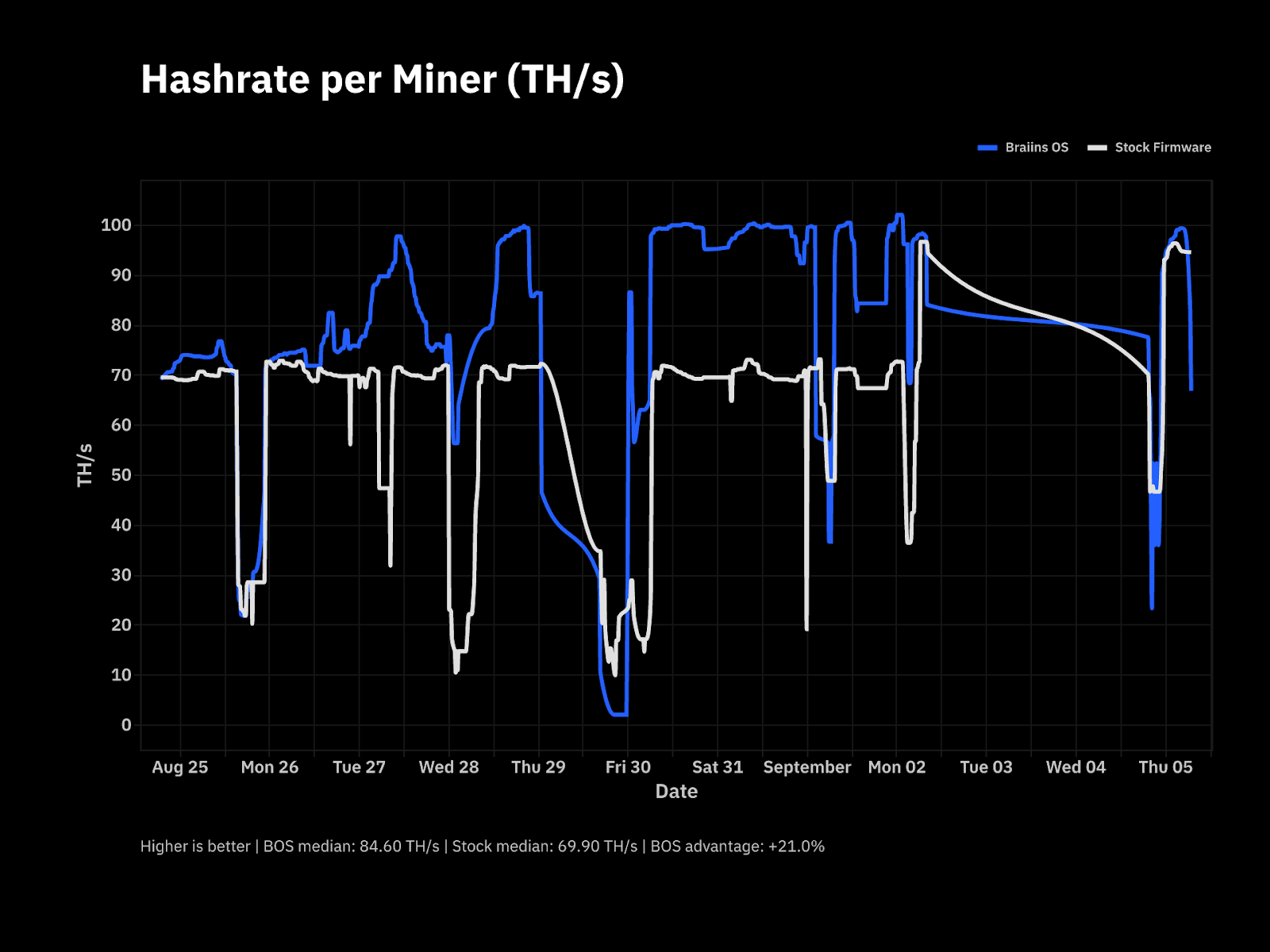
Stock firmware remained near ~70 TH/s per miner throughout the evaluation period. Braiins OS increased output to approximately 84 TH/s during the initial tuning phase and stabilized at 97 to 98 TH/s once Autotuning completed chip profiling.
During the peak period from August 30 to September 1, Braiins OS averaged 97.1 TH/s per miner, compared to 69.6 TH/s under stock firmware. This represents a 40% performance delta on identical hardware.
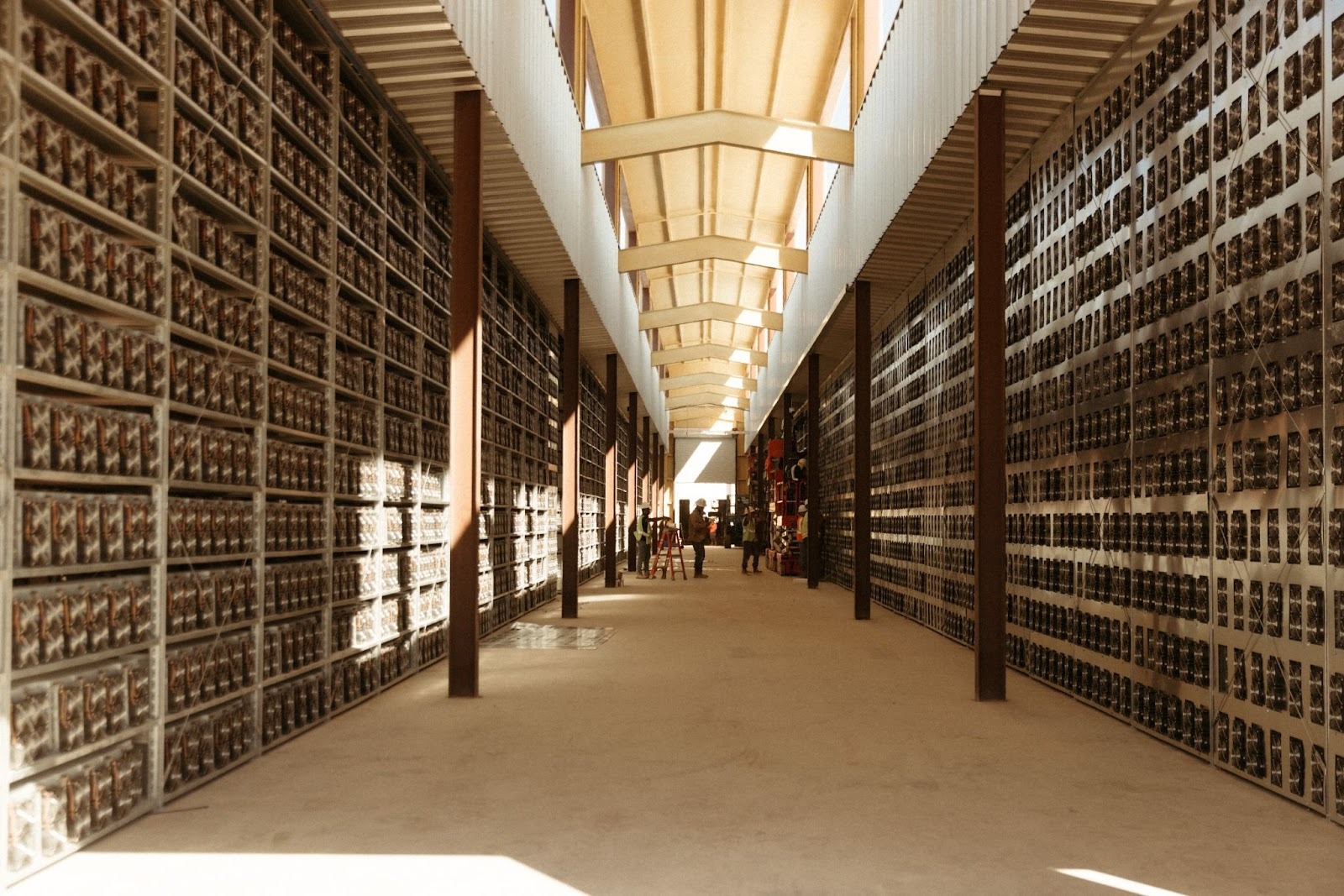
All groups operated within the same facility, under identical ambient conditions and hardware constraints. Temperature limits and fan parameters were applied consistently to maintain fair operating conditions. The observed difference was caused by firmware level optimization and per chip voltage and frequency tuning.
“The results confirmed that Braiins OS optimization alone materially improved performance under sustained heat, without changes to hardware.”
Philip Salter, CTO, GDA
Thermal Management Behavior Under Load
Stock firmware applies the same voltage and frequency settings to all chips on a board. Under rising temperatures, this approach results in performance volatility and repeated transitions into Low Power Mode.
This behavior creates thermal cycling. Each spike and subsequent throttle event increases hardware stress and reduces long-term stability.
- Across the evaluation period, stock firmware averaged 28.0 J/TH, while Braiins OS averaged 29.0 J/TH. The efficiency delta was approximately 1 J/TH.
- However, the difference becomes clearer as temperatures rise. Stock firmware efficiency increased by up to +2.2 J/TH across the operating range, while Braiins OS increased by approximately +0.8 J/TH under the same conditions.
This means stock firmware loses efficiency much faster as chips heat up, while Braiins OS remains more stable under the same thermal conditions.
The difference comes from how firmware manages individual chips. Stock firmware applies a single configuration across all chips. Braiins OS Autotuning adjusts voltage and frequency per chip, allowing stronger silicon to operate higher and weaker silicon to remain within stable thermal limits.
This allows the miner to deliver steadier hashrate while staying within the same temperature limits.
Per-Chip Auto-Tuning Deep Dive
Braiins OS optimizes each ASIC chip individually instead of applying one setting across the entire board. This delivers higher and more stable performance at any power limit by matching voltage and frequency to each chip. See the test conducted under TÜV supervision in a German laboratory.
Performance at Comparable Thermal Conditions
A key question was whether the higher hashrate was achieved by operating at higher temperatures.
Both firmware configurations operated at nearly identical chip temperatures. Stock averaged 156°F (69°C), while Braiins OS averaged 159°F (71°C), a difference of approximately 2°F (1°C).
Despite this minimal thermal difference, the hashrate delta remained approximately 32% during the peak comparison window.
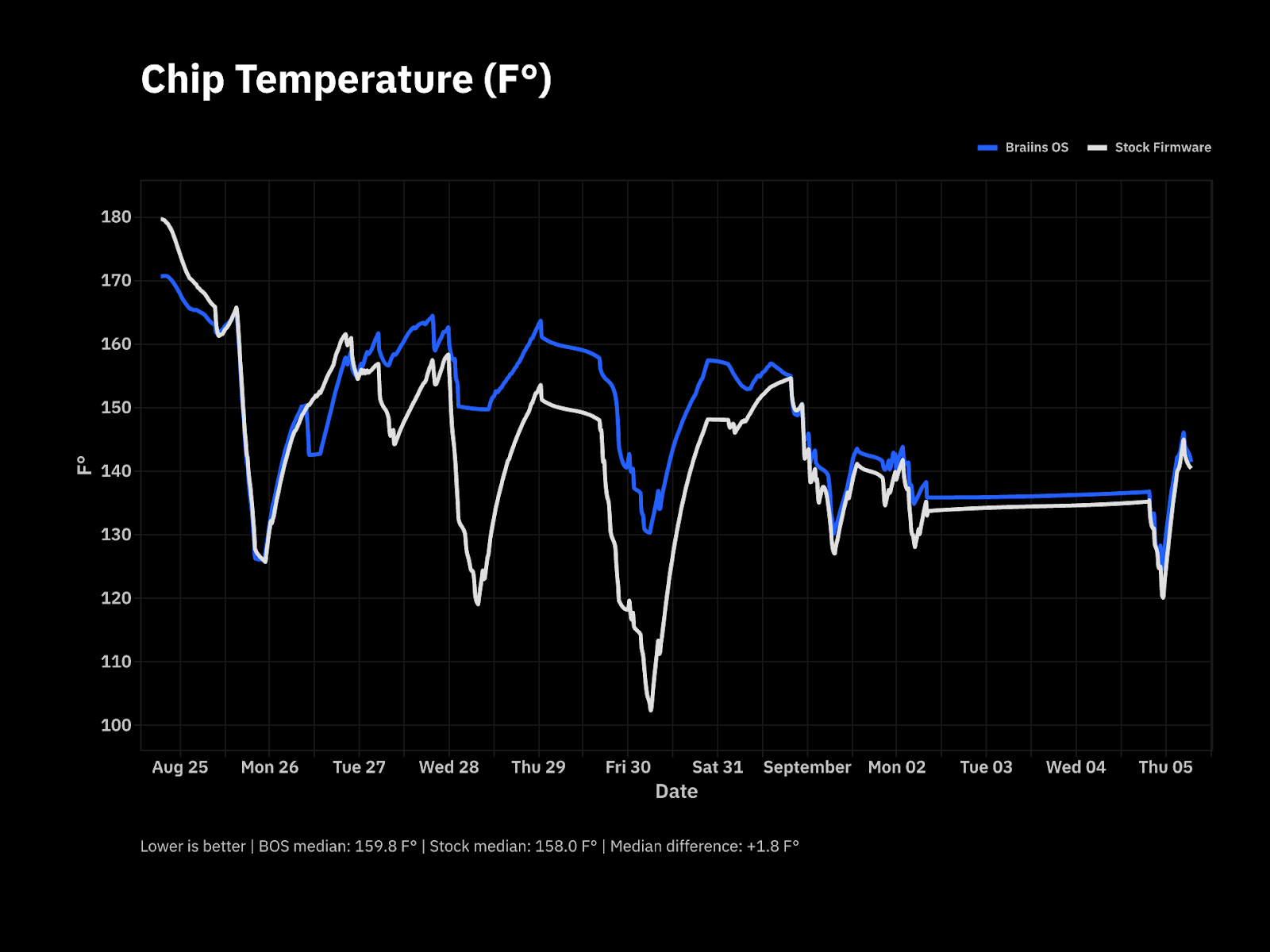
At comparable operating temperatures, Braiins OS delivered significantly higher output because Autotuning adjusts voltage and frequency per chip rather than applying a uniform configuration across the board.
This confirms that the performance gains were driven by firmware optimization, not by operating hardware outside normal thermal limits.
Learn how Braiins OS can be deployed across your mining fleet.
Consistent Hashrate in Extreme Conditions
Higher average hashrate is only valuable if it can be maintained over time. 88% of the time, Braiins OS operated above 80 TH/s per miner. Stock firmware did so only 2% of the time.
Stock firmware’s 90th percentile output was 72.5 TH/s. Braiins OS’s 10th percentile output was 79.0 TH/s. This means the lowest performance levels under Braiins OS were still higher than the best sustained levels under stock firmware.
Instead of binary throttling when temperatures rise, Braiins OS uses Dynamic Performance Scaling (DPS) to adjust power incrementally and remain within thermal limits while maintaining stable output. For large-scale ASIC firmware deployments, stability under heat is critical to sustained mining revenue.
The result is predictable, sustained hashrate under extreme conditions, rather than performance swings throughout the day.
"Braiins OS maintains better performance than stock firmware when both are downclocked. That makes a real difference during the hottest parts of the day."
Philip Salter, CTO, GDA
Your Hidden Hashrate
Adding 16MW of mining capacity requires land, transformers, power contracts, cooling infrastructure, and thousands of new ASICs. It requires months of deployment and significant capital.
At its 40MW deployment, GDA achieved the equivalent of 16MW of additional effective capacity through firmware optimization alone.
No infrastructure expansion.
No additional capex.
Only better utilization of existing assets.
“Custom ASIC firmware like Braiins OS offers advanced features, including Dynamic Performance Scaling, that are key with mining performance optimization, especially in harsh environments.”
Philip Salter, CTO, GDA
If you operate at scale and want to evaluate the impact within your fleet:
- Schedule a technical consultation with our team
- Batch deploy Braiins OS across thousands of machines in minutes
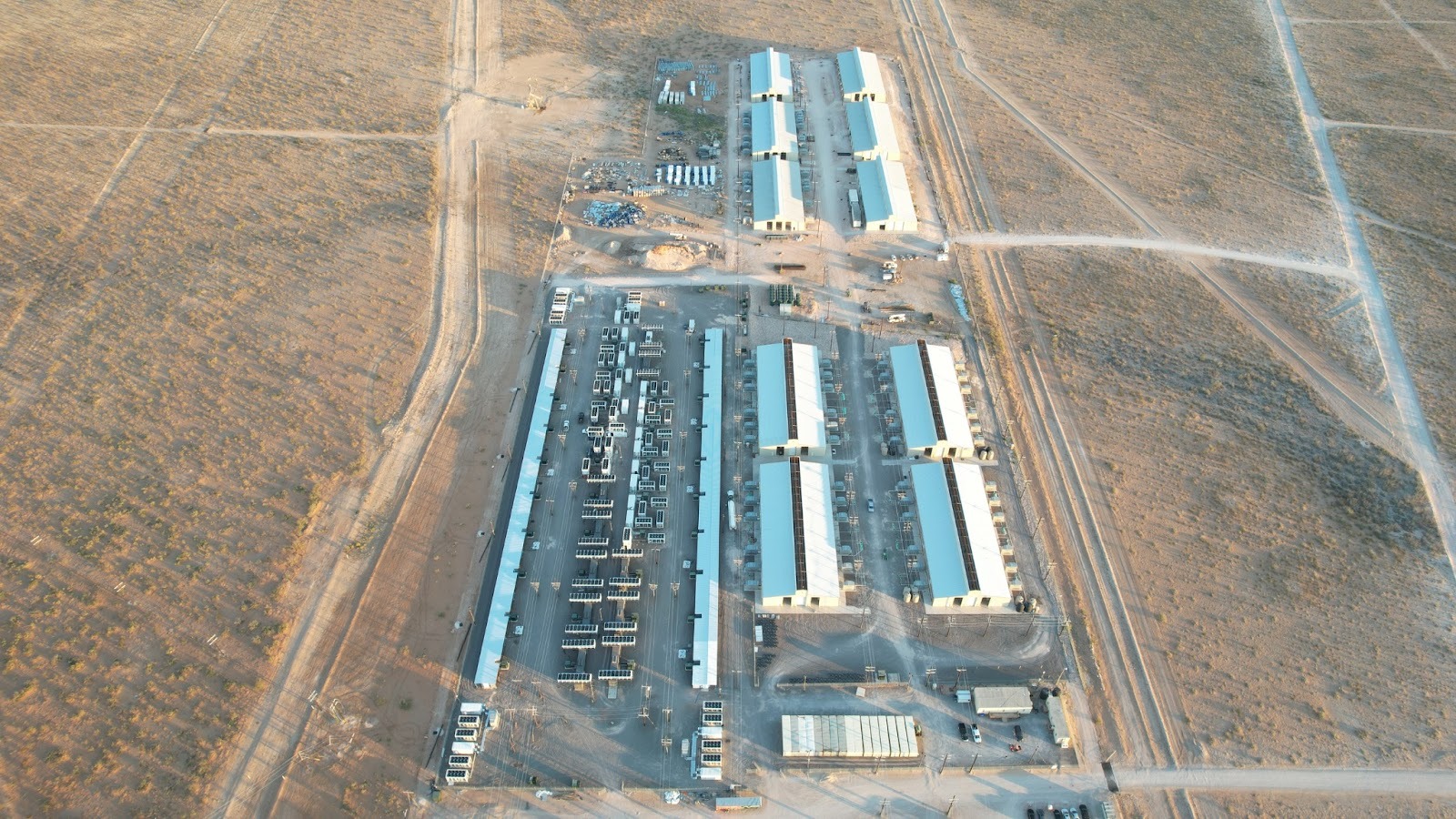
Learn more at braiins.com/braiins-os
Categories
Be the first to know!


More from
Mining Use Cases
Most Recent Articles
Hashing in 7 Days While the Miners Ship: How Sazmining Uses Braiins Hashpower Contracts
15.9.2026
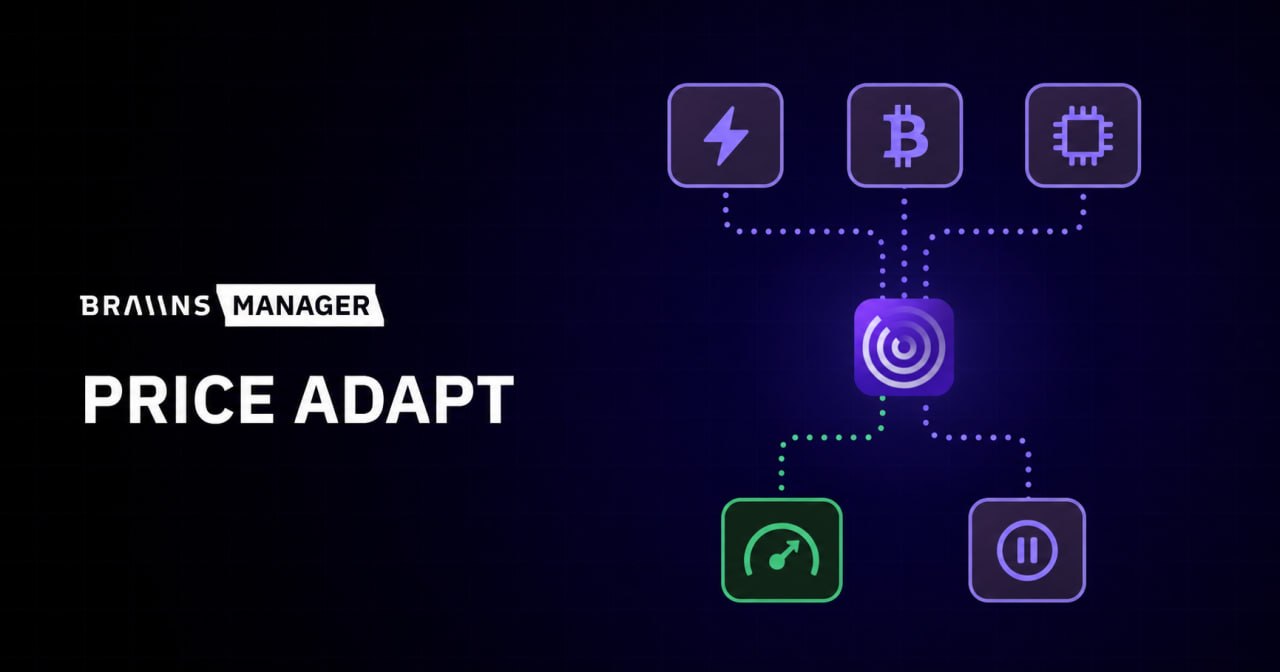
Price Adapt: Automated Bitcoin Mining Profitability Optimization with Braiins Manager
20.8.2026
Enel Partnership: Introducing Energy Intelligence - Make Your Flexible Bitcoin Mining Load Pay
16.7.2026