Off-Grid Bitcoin Mining: How Barefoot Keeps Sites Hashing with Braiins OS
Published
14.7.2026
Barefoot Mining runs more than 10 self-powered, off-grid sites across the US. This case study shows how Braiins OS helps them manage power limits, handle temperature swings, and keep miners hashing in some of the most unusual conditions.
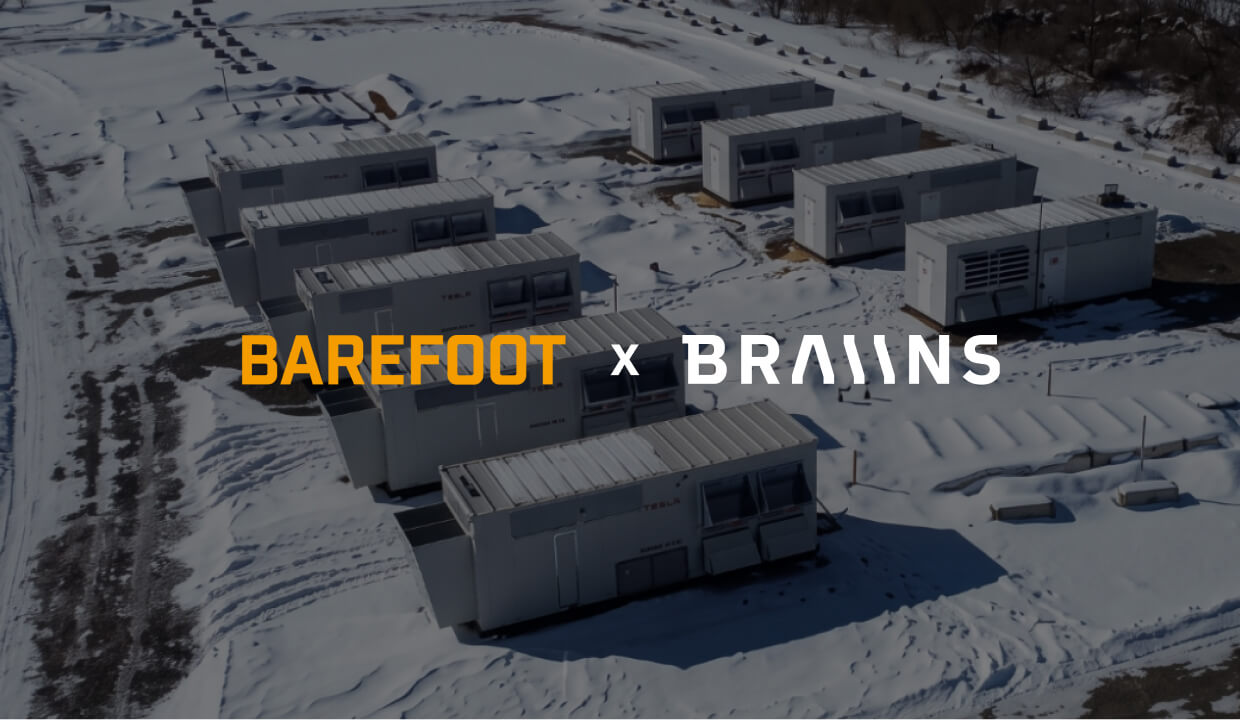
Table of Contents
At a Glance
Unlike more common industrial, grid-connected operations, Barefoot generates its own power, runs sites exposed to sharp day-to-night and seasonal temperature swings, and can pack up and move an entire site when conditions change.
- Customer: Barefoot Mining
- Operation type: Self-powered, off-grid bitcoin mining sites, as well small-to-medium commercial sites with a sweet spot between 0.5MW and 10MW. Bob Burnett the CEO refers to this as the “wild horse mining” strategy.
- Footprint: 10+ sites across South Dakota, South Carolina, Indiana, and Pennsylvania.
- Core challenge: Keeping miners online and profitable across power-constrained, remote sites under extreme temperatures.
- Solution: Barefoot tested Braiins OS on S19J Pro+ units at its South Dakota headquarters, then rolled it out fleet-wide.
- Result: Improved uptime in extreme temperatures, direct control over power-use at each site, and the ability to keep machines with damaged hashboards mining until repairs can be made.
Running into heat, power limits, or uptime problems at your site? We can help. Schedule a technical consultation.
Barefoot’s “Wild Horse Mining” Strategy
Barefoot Mining puts compact rigs on off-grid as well as small-to-medium commercial sites and runs them on power the company generates themselves.
Producing their own energy gives Barefoot two advantages:
- It lowers their energy cost over the long haul
- It keeps control of the operation in their hands instead of the utility’s
That sovereignty is the foundation of their operating model.
Barefoot looks for sites between 0.5MW and 10MW. At that size, sites can go up fast, move when conditions change, and avoid some of the local resistance and regulatory pressures that come with operating larger facilities. The model also spreads risk across multiple locations instead of concentrating it in one large site.
Ask Barefoot how big they are and you get a straight answer about staying nimble:
“We are big enough to not be small, but not big enough to be big."
— Barefoot Mining
The Heat Problem
Barefoot ran their machines on stock firmware for years, with some experiments on other builds.
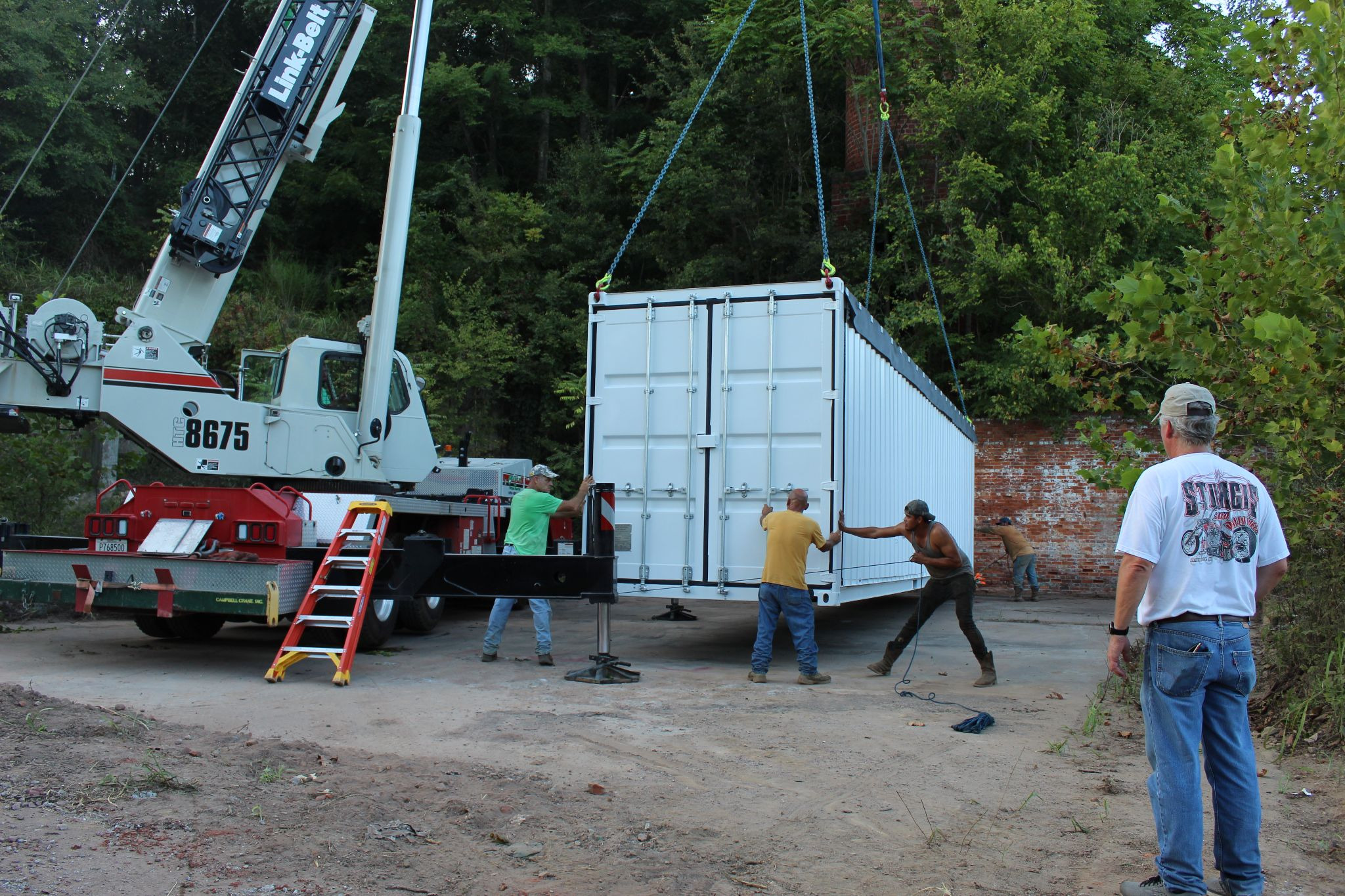
But off-grid and rural sites sit out in the open, exposed to whatever the seasons bring. In summer, ambient temperatures climb high enough that stock firmware starts throttling hashrate or dropping machines offline to protect the silicon. Every drop in hashrate meant lost revenue that better firmware could help avoid. Barefoot needed a way to keep machines running optimally under these conditions.
Managing the Transition to Braiins OS: From Test Site to Fleet-Wide Rollout
Barefoot began the rollout of Braiins OS with a controlled test at their South Dakota HQ on S19J Pro Plus hardware.
The firmware helped the machines stay online longer in higher ambient temperatures. Within a few months, the results were clear enough to deploy Braiins OS across all of its sites.
The difference between stock firmware and Braiins OS comes down to how each responds to heat. Stock firmware applies one voltage and frequency profile to every chip on a board, then throttles in big steps when temperatures rise. Braiins OS tunes each chip individually and uses Dynamic Performance Scaling to step power down gradually as thermal headroom shrinks.
The result is more precise control. Instead of cutting the whole machine back too aggressively, Braiins OS keeps the miner online and hashing at the highest level the conditions allow.
The Braiins OS Features Barefoot Uses Every Day
Power control for constrained sites and aging hardware
When you generate your own power, you live inside a power budget. For Barefoot, one of the most useful Braiins OS features is direct wattage control: the ability to set how much power each machine uses.
"Hands down, the feature for my location is being able to control the wattage of units running on Braiins OS when there are power constraints. It also helps when targeting the efficiency of older units."
— Barefoot Mining
That control solves two problems at once. On constrained sites, Barefoot can cap machines to match the power available. On older units, they can dial machines into a more efficient operating point and get more sats per watt from hardware that might otherwise be retired.
Automatic throttling that keeps machines online in the heat
Barefoot did not know how valuable automatic throttling would be until they saw it working in the field. When ambient temperatures rise, machines running Braiins OS can throttle back instead of simply tripping offline.
That matters on exposed off-grid sites. Rather than losing production during the hottest part of the day, Barefoot can keep machines hashing at the highest safe level the conditions allow. Across a fleet of off-grid sites, those extra hours of uptime add up.
Keeping machines with defective hashboards mining until repairs can be made
Barefoot pointed to it as a clear money-saver/
“Being able to run machines with a defective board helps keep units running until we have time to pull the bad boards for repair. That is a huge benefit.”
— Barefoot Mining
A miner with one bad hashboard would normally sit idle until someone can get to the site and fix it. On a remote operation, that might take days. Braiins OS lets the working boards keep hashing in the meantime, so a partial fault does not become a total loss.
Why This Matters if You Run a Mid-Size Operation
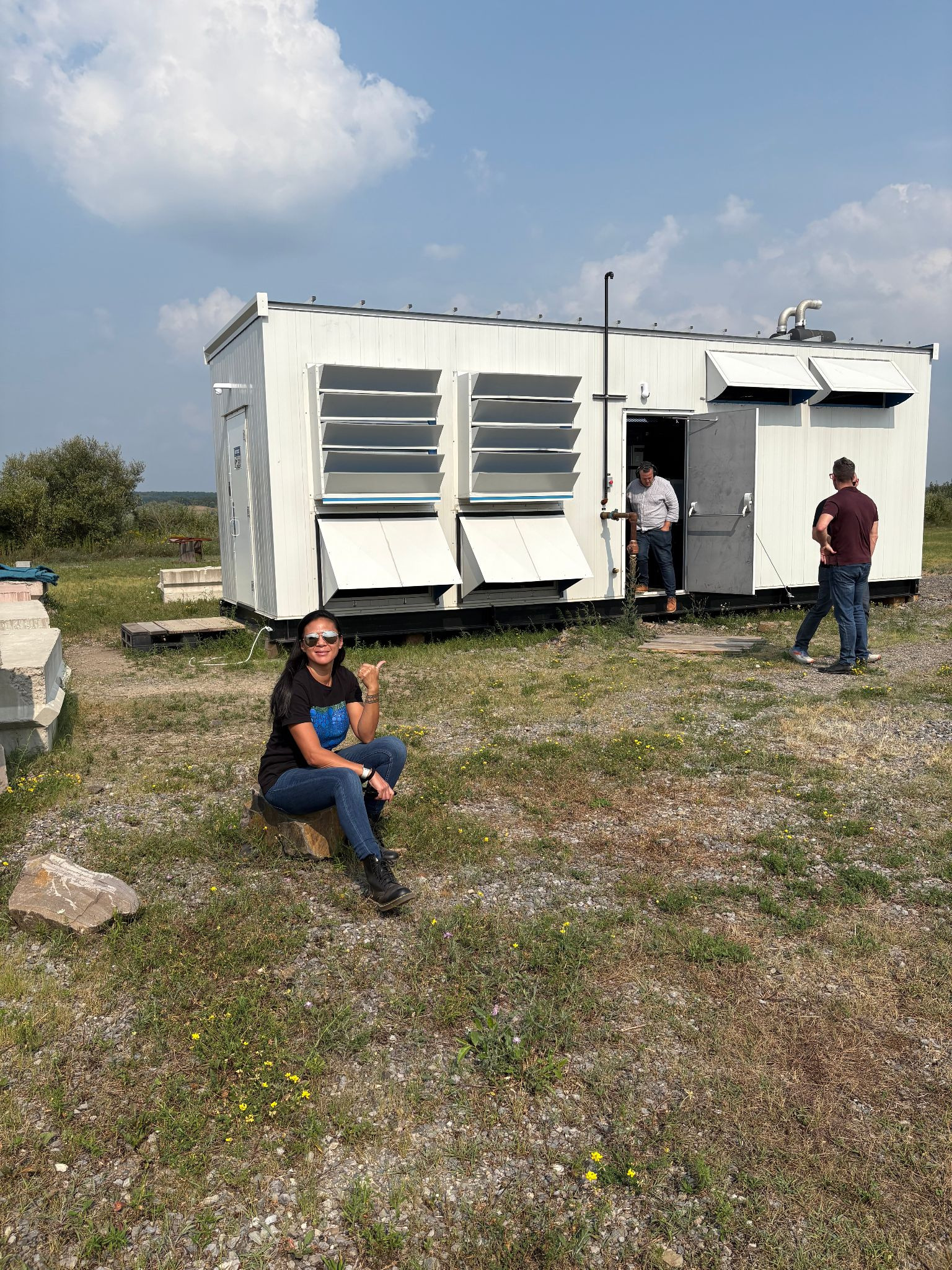
Large industrial mining facilities usually have a clear playbook. Smaller off-grid operators often have to build their own.
Most firmware marketing is written for the former.
Barefoot’s experience shows what that playbook can look like:
- Run on energy you control
- Keep sites small enough to build quickly and move when conditions change
- Use firmware that protects uptime with variables you can’t control: heat, tight power budgets, and hardware faults that cannot be repaired right away.
For mid-size operators, Braiins OS provides three practical levers:
- Power limits per machine to fit a self-generated energy budget and improve efficiency on older units
- Dynamic Performance Scaling to keep machines hashing through heat instead of dropping offline
- Partial-fault operation to keep a machine earning when one hashboard fails and a technician cannot reach it immediately
None of that requires new transformers, new cooling, or a bigger site. It means more output from the hardware already running in the field.
Support Is Part of the Product
For off-grid operators, firmware is only part of the decision. When a site is hours from the nearest town and downtime means lost revenue, support and communication matter too.
Barefoot called this out directly:
"Support and communication are just as important as the product. Braiins gets very high marks in this area. We view Braiins as an important partner of Barefoot's."
— Barefoot Mining
That kind of partnership matters most when something breaks in the field. A spec sheet can explain what firmware does, but it can’t show how quickly a team responds when a remote site needs help.
The Road Ahead
Good partners also tell you what still needs to get better. Barefoot did.
They want firmware that can do more on its own:
- Detect when a machine has stopped hashing or is underperforming
- Adjust settings automatically, and bring it back online without waiting for a human operator.
- Tuning to ramp performance back up once the hottest part of the day has passed.
Barefoot also flagged hardware support. As they evaluate manufacturers beyond Bitmain, broader Braiins OS compatibility would give them more flexibility across future deployments.
That feedback matters. Self-healing behavior and broader hardware support are exactly the kinds of improvements that make life easier for mid-size operators in the field, and conversations like this help us improve Braiins OS for you.
Run Your Fleet on Braiins OS
If you operate off-grid, in extreme weather, or under a tight power budget, Barefoot's results are worth testing in your own setup.
Big thanks to the Barefoot Mining team for sharing how wild horse mining works in practice, and for putting our firmware to work in some of the toughest conditions in the field.
Learn more at braiins.com/braiins-os.
Categories
Be the first to know!


More from
Most Recent Articles
Hashing in 7 Days While the Miners Ship: How Sazmining Uses Braiins Hashpower Contracts
15.9.2026
Price Adapt: Automated Bitcoin Mining Profitability Optimization with Braiins Manager
20.8.2026

Enel Partnership: Introducing Energy Intelligence - Make Your Flexible Bitcoin Mining Load Pay
16.7.2026