Hashing in 7 Days While the Miners Ship: How Sazmining Uses Braiins Hashpower Contracts
Published
15.9.2026
How Sazmining uses hashrate as a service to keep customers earning while their hardware is in transit.
Table of Contents
At a Glance
- Customer: Sazmining, a Bitcoin mining-as-a-service company.
- Use case: Covering the gap between a device purchase and the physical machine coming online.
- Solution: Braiins Hashpower Contracts resized to match the device(s) each customer bought.
- Go-live: Early June 2026. Public product launch: August 2026.
- Volume: 3 to 7 contracts per week, roughly 20 to 50 PH/s.
- Sazmining customer promise: hashing within 7 days of purchase.
About Braiins Hashpower Contracts (public product context)
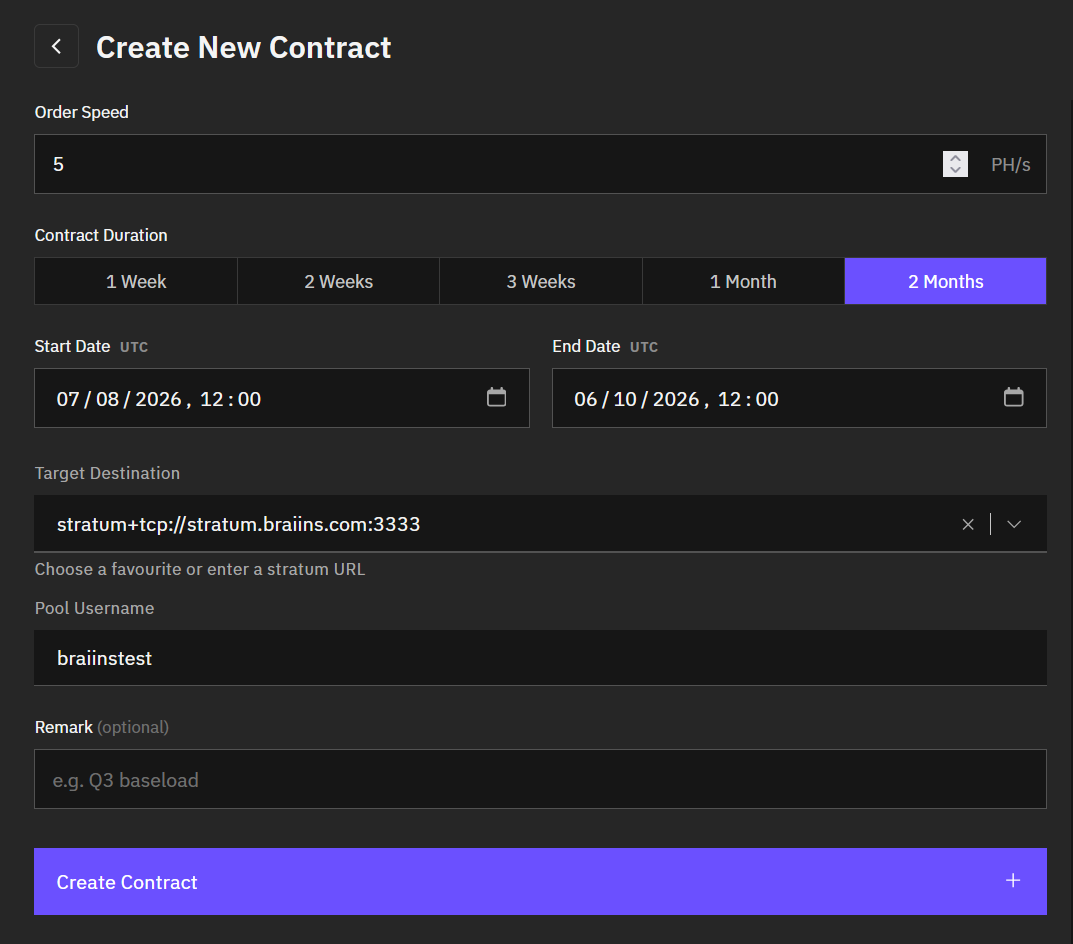
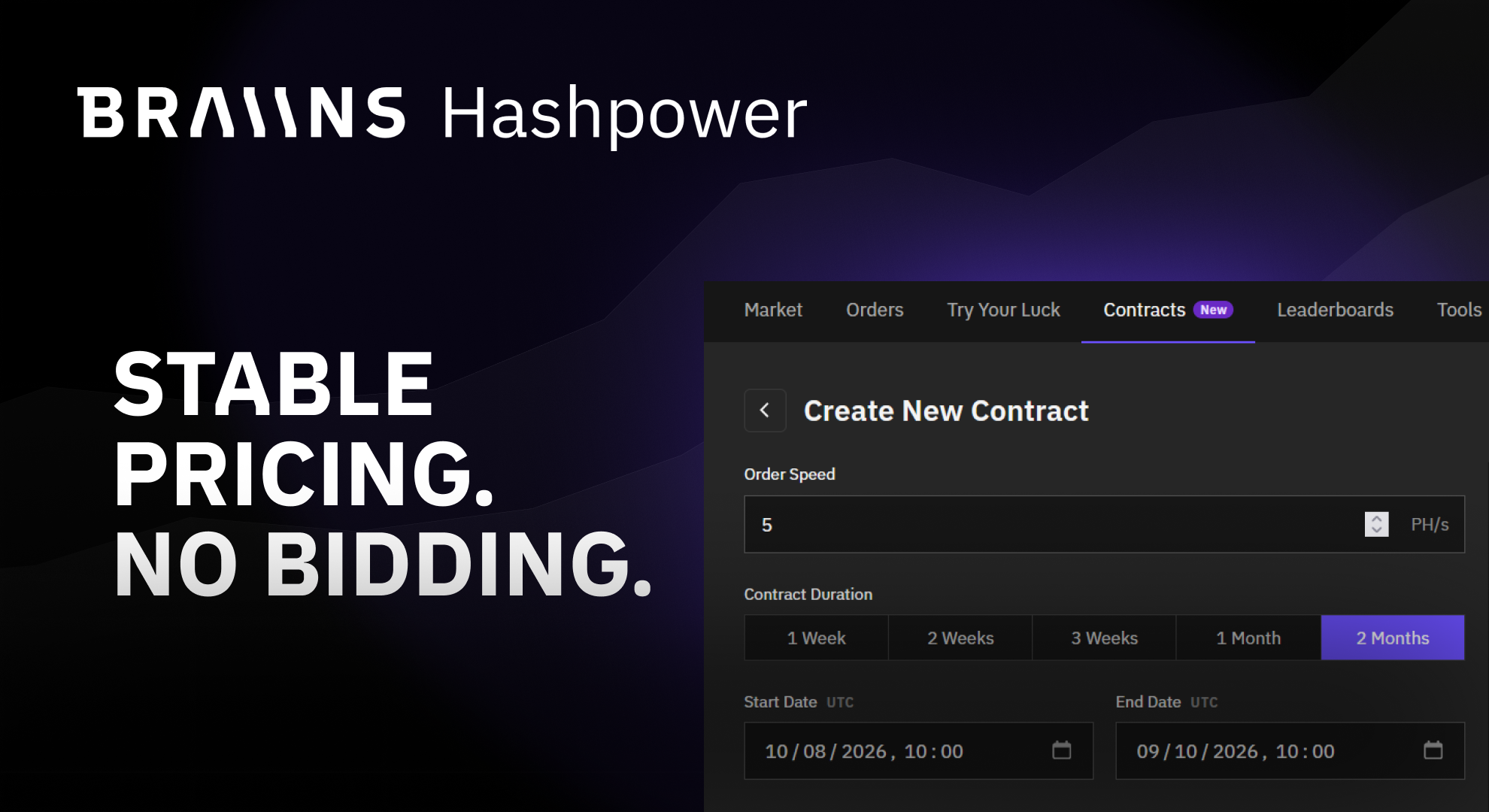
Sazmining started on a custom OTC deal with Braiins before the public product launched. The same capability is now self-serve for anyone at hashpower.braiins.com/contracts: contract sizes from 1 PH/s to 2 EH/s, terms from 7 days to 2 months, a fixed fee over daily FPPS, and delivery guaranteed for the full term. The rest of this article calls out where Sazmining’s original deal terms differ from the public product.
The customer experience problem behind virtual mining rigs
Sazmining is a technology-first mining company. It coined the term Bitcoin mining as a service, and unlike most hosts it does not compete with other hosting providers. As Kent Halliburton, Sazmining’s CEO, puts it, its real competitor is the exchange: the question in a customer’s mind is whether to buy Bitcoin or to mine it.
The company operates 9 MW in Paraguay, more than 4 MW in Texas, 2.5 MW in Norway, and a smaller footprint in South Dakota, but it does not own any of those sites. Sazmining aggregates customer demand and contracts with site operators to run the machines.
In that model, everything depends on delivering hashrate fast. When a customer buys a rig, the countdown to the first Bitcoin starts immediately. In practice, the countdown involves customs, freight, site preparation, and installation. In new regions like Ethiopia and Paraguay, Sazmining has seen that stretch to one or two months.
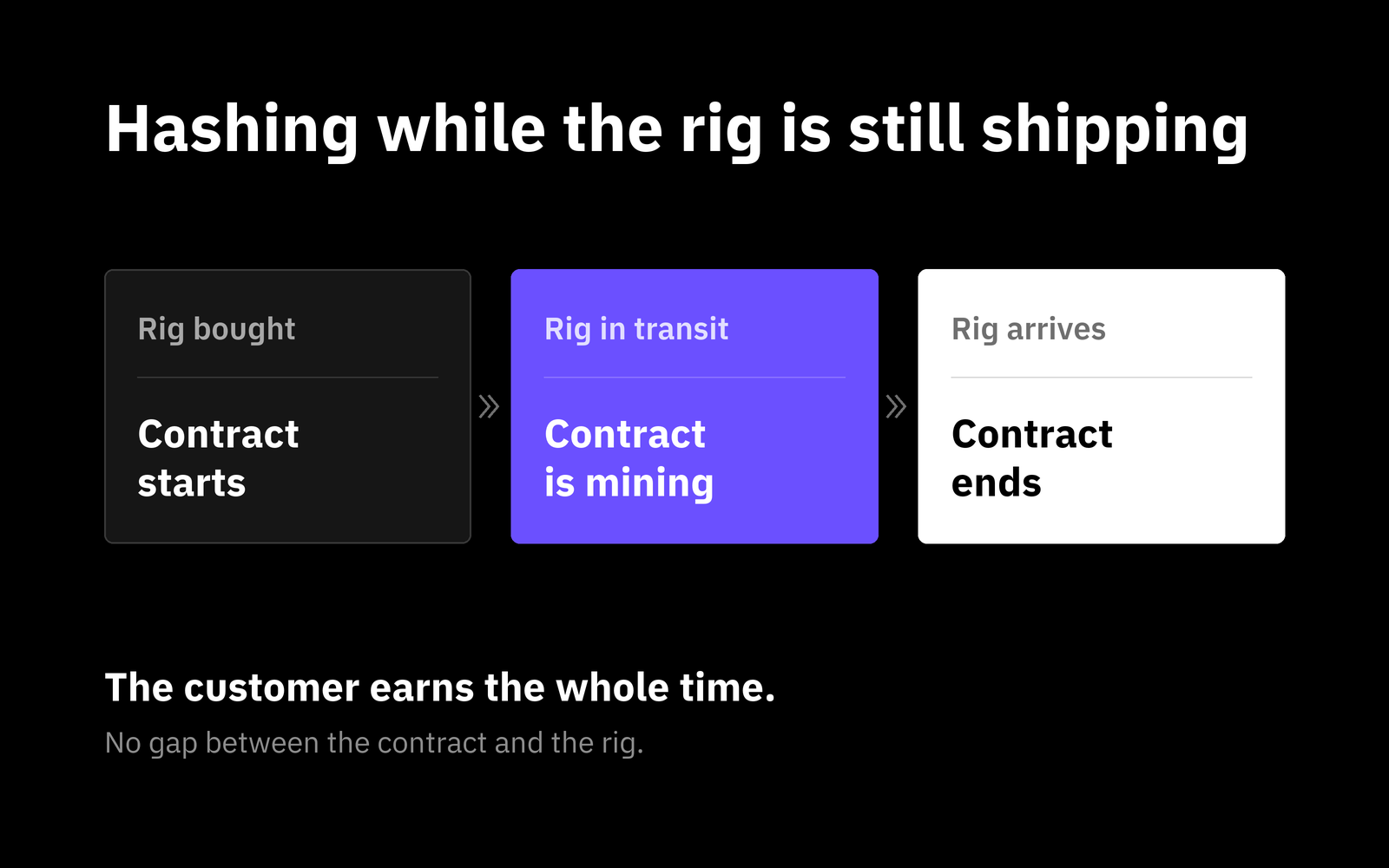
Sazmining calls this a virtual mining rig. Behind it is a Braiins Hashpower Contract sized to match the machine the customer bought, delivered within 7 days of checkout.
"We were taking hashrate and packaging it up into the same size as the hardware itself. That’s what we call virtual mining rigs for our clients." - Kent Halliburton, CEO, Sazmining
Why Sazmining switched hashrate providers
Sazmining had bought hashrate before Braiins. The switch from the competition was not driven just by price, but primarily by the more suitable contract structure.
"[The competitor] wants to set a contract size at a Bitcoin denomination. When a difficulty adjustment happens, if it’s up, you consume that Bitcoin faster. If it’s down, it lasts longer. And what we’re trying to deliver is a steady hashrate over a period of time." - Jeremy Milliorn, CFO, Sazmining
That distinction matters because Sazmining customers bought a physical machine with a fixed hashrate. During the shipping gap, Sazmining needs to provide the same hashrate for a predictable amount of time.
Braiins Hashpower Contracts are designed for this because both hashrate and duration are fixed. A 7-day, 20 PH/s contract delivers 20 PH/s for exactly 7 days. Difficulty and market changes may affect the customer’s BTC output and, through daily repricing, the price Sazmining pays for the contract, but they do not change the delivered speed or shorten or extend the contract. Contract hashrate also has delivery priority, meaning guaranteed speed for the whole term regardless of spot-market competition, which is exactly what Sazmining’s 7-day promise depends on.
On their side, Sazmining splits each contract into device-sized slices, so that they can promise customers will begin hashing within 7 days. If the rig has not arrived by then, the customer earns from the contracted hashrate first and switches to the physical machine when it comes online, with no interruption in mining rewards.
Need Sazmining-scale volume?
That product fit was reinforced by how easy Braiins was to work with. Sazmining found onboarding faster and simpler than expected, and support has been equally straightforward, with the Braiins Hashpower team typically quick to respond whenever help was needed.
How Sazmining delivers hashrate as a service to each customer
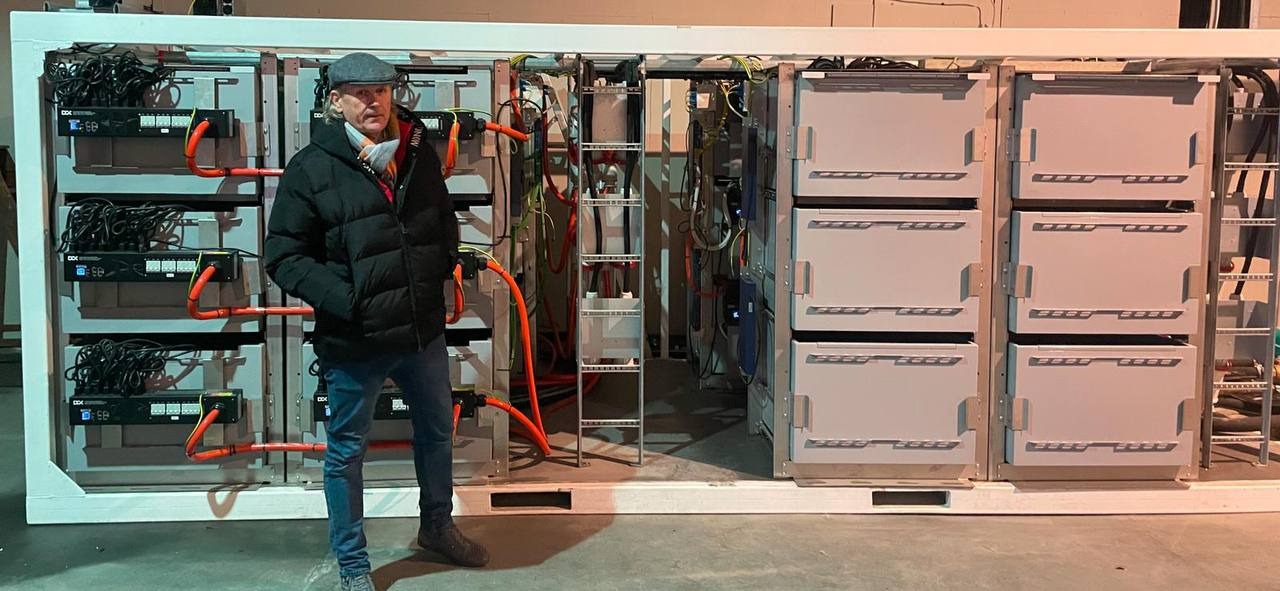
Sazmining splits each Contract into the exact hashrate each customer’s rig would produce using an intermediary layer. Each slice points at the payout address the customer gave at checkout.
When a customer’s physical machine comes online, Sazmining can end the contract or use that hashrate for another customer still waiting for their rig. The 7-day structure mirrors the commitment Sazmining makes on its site and gives the team a simple, predictable way to handle the handoff.
The impact: customer trust and retention
There is no clean before-and-after comparison because hashrate coverage was part of the 7-day offer from the beginning. The more useful measure is what that promise protects: customer trust.
About 80% of Sazmining’s sales come from existing customers. That makes the waiting period especially important. A customer who spends $5,000 on a miner and then waits weeks without seeing any mining activity can quickly start questioning the purchase.
"You spend $5,000 on a mining rig and I’m telling you, don’t worry, it’s coming. A week later, three weeks later, by week five you’re thinking, I got scammed. Being able to deliver in 7 days shifts that entirely. We’ve watched customers get their first payout and immediately say, hold on, I should get another one of these." - Jeremy Milliorn, CFO, Sazmining
By the time the physical machine arrives, the customer has already been earning BTC, and the new rig has yet to start hashing.
For Sazmining, Braiins Hashpower Contracts make that possible without tying up capital in extra hardware. The fixed contract length also gives the team the certainty it needs to cover shipping delays without the duration changing underneath them.
Where this goes next
Sazmining is already discussing internal use cases beyond the shipping bridge. The one they keep circling is downtime coverage. If an outage takes machines offline longer than the repair SLA allows, a Contract could keep those customers earning until the site recovers.
Demand response is the other candidate, especially in Texas. Sazmining does not do demand response today. But if it ever does, Contracts could keep customers earning while machines power down.
Like the shipping bridge, both use cases involve a defined gap in customer-facing hashrate that a Contract could cover without adding physical hardware.
See how you can use Braiins Hashpower Contracts to secure the hashrate you need, when you need it.
Categories
Be the first to know!


Most Recent Articles
.png)
20.10.2026
Price Adapt: Automated Bitcoin Mining Profitability Optimization with Braiins Manager
20.8.2026
Enel Partnership: Introducing Energy Intelligence - Make Your Flexible Bitcoin Mining Load Pay
16.7.2026